7 Mar 2012

Do You Know Who Joseph Kony Is?

Today's post is a little different. I'm linking (hopefully -- my technical skills are small) to a YouTube video my son alerted me to. It's a well-done expose of Joseph Kony, a man who is truly evil. He has been stealing children and making them sex-slaves or child soldiers for decades. This is a campaign to stop him.

How does it have to do with health? Having this happen on our planet is bad for all of us -- bad for our hearts. And I care about the health of those kids he steals.

3 Mar 2012

Sleeping Pills Could Kill You

Screen_shot_2012-03-03_at_6
I am a fan of sleep. I love getting a good night’s sleep, personally, and I love hearing my patients are sleeping well. Sleep is restorative. Bodies heal and pain lessens overnight, with sleep. Problems that loom and seem to have bleak outlooks become smaller and more manageable after a good night’s sleep. I just love, love sleep.

So why am I not a fan of sleeping pills?

If sleeping pills did what their name implies they do, I would like them. That is, if they gave normal, restorative sleep, without a lot of other baggage. The trouble is, they come with baggage. Loads of baggage.

First, taking a sleeping pill regularly often leads to dependence. That is, sleep becomes possible only when a sleeping pill is taken. For people who are dependent, not taking the pill means they will have a harder time getting to sleep than they did before they ever began it.

The sleeping pills I’m talking about are the commonly prescribed “benzodiazepines”. Older people, in particular, tend to get the side effects of daytime grogginess, lightheadedness, fuzzy thinking, and clumsiness in the arm and leg muscles.

Now a new study, published in British Medical Journal Open looked at a huge database of rural Americans – comparing 10,000 adults who use sleeping pills with 24,000 non-users. (http://bmjopen.bmj.com/content/2/1/e000850.full ) Here are the results: Are you sitting down? Over the course of two-and-a-half years, six percent of sleeping-pill users died, five times as many as non-users.

But, you may ask, maybe the users were sicker – and that’s why they were taking the sleeping pill. The researchers state that they made sure their comparison groups contained people with similar health. In medical studies they call this “adjusting for comorbidities”.

Now, these are not people who are taking a sleeping pill every night. In fact, taking fewer than 18 pills a year led to a higher risk of dying (though the higher the number of pills per year, the higher the risk of death).

The authors of the study offered some possible reasons sleeping pills are so risky. If people took them along with drinking alcohol, they may never wake up. Other studies have shown they increase the possibility of becoming depressed, and there is a higher suicide rate among users. Also, these types of drugs interfere with people’s ability to drive cars, and users fall more frequently. Finally, they are associated with compulsive night-time eating, which can lead to poor diet and all the problems that go along with obesity.

So getting a good night’s sleep is important – but for the problem of sleeplessness, sleeping pills are not the answer.

21 Feb 2012

When Does the Brain Start to Slip?

Screen_shot_2012-02-20_at_5
What I’m going to share may not be good news – unless you are relieved to know why you keep forgetting where you parked the car. You know that mental slowness that comes with old age? Well, the villain may not be old age. The decline seems to begin in the 40s.

A study just published in British Medical Journal (BMJ) looked at data from evaluations of 7400 British civil servants over a decade of follow-up. The people in the group who were 45-49 when the study began declined in mental sharpness 3.6 percent over the next ten years.

With each group of older people (ages 50-54, 55-59, 60-64, 65-70 at baseline) there was a progressively larger decline, though women in the oldest age group declined less than men – only 7.4 percent over the decade, versus 9.6 percent in men.

So what did the researches study to show this mental decline? These are the kind of nitty-gritty details in medical studies that fascinate me, so I am passing them on to you. They tested five areas of brain power:

·      Memory – They spoke 20 words over 40 seconds, then asked the participants to write down as many of them as they could remember.

·      Reasoning – They used a standard test to measure this, looking for the ability to identify patterns and infer principles.

·      Phonemic fluency – “In one minute, write as many words that begin with “S” as you can think of.”

·      Semantic fluency – “In one minute, write as many names of animals as you can think of.”

·      Vocabulary – They used a standard 33-word multiple-choice test.

Interestingly, vocabulary didn’t decline with age. We retain our ability to know what words mean.

I know I don’t usually litter my posts with dull statistics, but I felt like the exact percentage of mental decline would be interesting. If you want to slog through the research study yourself, the link is http://www.bmj.com/content/344/bmj.d7622.full?linkType=FULL&resid=344/jan04_4/d7622&journalCode=bmj . All BMJ articles are free for anyone to read.

So what can we do about this? Actually, there’s a lot we can do to slow down the brain’s aging. Staying a healthy weight helps a lot. Obesity has been shown to increase rates of dementia. So has high blood pressure, and high cholesterol levels. Getting regular exercise is key.

So does that inspire you (as it does me) to dust off your New Year’s resolutions and return to your weight-loss plan and to get moving with some exercise? Yes, yes! Let’s keep our brains sharp.


6 Feb 2012

The Lingering Effects of Katrina

Screen_shot_2012-01-26_at_12
I spoke recently with a friend who has moved to a town near New Orleans. Much of it flooded during Hurricane Katrina’s aftermath. The entire town was evacuated, and most families lost everything they owned. My friend, a nurse practitioner, says every patient works Katrina into every conversation.

“Before Katrina I lived in such-a-such a place…”  Or, “This problem started a year after Katrina.” The hurricane changed their lives – radically – and so everything links to it, like spokes radiating out from the hub of a wheel.

Living in North Louisiana, I was shielded from much of Katrina’s impact. Our community opened shelters, of course, and afterwards many evacuees settled here. But for those who lost everything, this was no small blip in the path through life.

My nurse practitioner friend’s patients are mostly middle class. If they had a rough time, think how difficult it was for the poor to go through the losses of Katrina. A new study published in the journal Social Science and Medicine was able to analyze exactly that. (http://www.princeton.edu/main/news/archive/S32/74/14C15/index.xml?section=topstories )

Remarkably, the authors of the study had surveyed 532 low-income mothers, average age 26, two years before Hurricane Katrina. They had asked questions about their mental and physical health as well as their family situation. Then when Katrina hit, the researchers realized they had a perfect “before” snapshot of a group of people who just experienced a traumatic event. So they “hunted” the women until they found most of them, now scattered across the country, asking them to complete several more surveys over the next five years.

The surveys assessed the level psychological distress the women had, as well as how many post-traumatic stress symptoms (PTSS) they were experiencing. To evaluate PTSS, they asked how often they thought about the hurricane in the past week, and whether they had thoughts on Katrina they couldn’t suppress. Even five years later, 33 percent of the women still had PTSS, and 30 percent of them had high levels of psychological distress. The more stressors they had gone through during the storm (home damage, death of a friend or relative, being in danger or lacking food, water, or medical care), the more likely they were to have persistent PTSS or psychological distress.

These levels of mental stress are higher than found in previous studies of people who have survived disasters. Of course, Katrina was more disruptive than most natural disasters. This study shows that people who have gone through something tough may need more emotional support – and for a longer time – than seems obvious. The poor, who have fewer resources to fall back on, may need even more.

1 Feb 2012

Mothering Young Adults

Screen_shot_2012-02-01_at_5
This past weekend I saw the movie Warhorse, which I recommend, by the way, and one side plot has stuck with me. The central story is what happens to a horse which has been conscripted for use in WWI. Two of the many people who interact with the horse are two young German brothers. Very young brothers. In fact, one is only 14. 

It sounded like the boys’ mother knew the younger one was enlisting, but made the older brother promise to keep him safe. The older brother took that promise very seriously, and was willing to disobey his commanding officer to keep it.

When the younger brother is sent to the front lines, the older one is forced to stay back with the horses. He watched his brother march off, deeply conflicted. The next thing we see is him galloping up to the line of marching men, leading a second horse, and grabbing his brother from the line. They gallop off. The hide out in a barn, where they are found by their commanding officer, and then summarily shot.

It was very hard to see them killed, since I had gotten to know and like them. But I didn’t realize how deep an impression that scene had made on me until the next morning, when I woke up in a cold sweat. As soon as I was conscious I realized I had been dreaming about those two boys.

The older brother was foolish to go AWOL, but I think the mother was more foolish, still. What do I want for my children, as a mother? Many things, but notably for them to stay alive. She insisted on a promise from the older son, and he was willing to risk his life to keep that promise. If the younger son had died, the mother would have been devastated, and the older son didn’t want to live with that. So instead of having one son safe, she lost them both.

Yes, this post is a little different than my usual fare. But in a sense it is about health – keeping young men alive (that’s healthy!) and protecting the hearts of mothers from crushing sorrow.

What choke-holds do I place on my children? I’ve been thinking about that this week. I want them to live for God, within their own moral framework, and not to try to live up to my expectations. Making me happy can’t be their goal. For if I cling to them, I just might lose them entirely.

23 Jan 2012

Who Gets Abortions?

Screen_shot_2012-01-23_at_2
Today is the 39th anniversary of the U.S. Supreme Court decision that legalized abortion, commonly known as Roe v. Wade. I knew I wanted to write about abortion today, and so have been doing some research. The research has gripped me. You see, I consider abortion as the taking of a human life, and so learning how many of those human lives are interrupted each year has been sobering.

According to the Guttmacher Institute (http://web.archive.org/web/20080313054435/http://www.guttmacher.org/in-the-know/incidence.html ) 46 million abortions occur yearly, worldwide. I can’t wrap my mind around 46 million, so I’ll focus on the U.S., in which 3400 occur every day.

And who are those 3400 women? 41 percent are white, 32 percent are black, and 20 percent are Hispanic. Woman for woman, though, more blacks and Hispanics have abortions, compared with white women. For every 1000 white American women, 13 have an abortion each year, whereas black women have 49 per 1000, and Hispanics have 33 per 1000. The Guttmacher Institute (http://web.archive.org/web/20080311171704/http://www.guttmacher.org/in-the-know/characteristics.html) concludes, “Over time, women having abortions have become increasingly likely to be poor, nonwhite and unmarried, and to already have one or more children.”

If you take a group of 45-year-old American women, who have reached the age when the likelihood of pregnancy is small, one out of three will have had an abortion. A lot of those women regret that abortion, and I ache for them. 

20 Jan 2012

The Risk of Death in Grief

Screen_shot_2012-01-20_at_7
Lest you had any doubt that the brain is connected to the heart, here comes a study that links those two oh-so-important organs. People who were in the hospital because of a heart attack (also known as a “myocardial infarction”, or “MI”) were asked, among other things, whether a loved one had recently died. Of the 2000 people asked, 270 reported that someone they loved had died within the past six months, and 19 people had lost a loved one within the past day.

To put it another way, the first day of grief increased the risk of MI by more than twenty times what would be expected on a day without such sorrow.

Over the years I’ve heard of multiple loving couples who have died within a week of each other. I’ve heard people say: “He (or she) died of a broken heart.” The above study, published in the medical journal Circulation, supports those comments.

What I take away from this research is a renewed resolve to do what I can to support people who are grieving. Grief is a painful time. The way “life was supposed to be” has been altered, perhaps abruptly. I was walking purposefully down one path, thinking I could see my goal in the future, and now, suddenly, I am forced to walk down this other path, with no goal visible. The process of adjusting to this new reality is what we call grief. And it’s no fun.

Maybe all a grieving person needs is a wordless hug. I suspect that’s all that person needs. 

2 Jan 2012

Moisturizing Skin

Screen_shot_2012-01-02_at_11
When I was in medical school on my dermatology rotation, we joked that all skin treatments boil down to three decrees: If it’s wet, dry it. If it’s dry, wet it. And if in doubt, use steroids.

Some other time I’ll discuss the “drying” of skin, or the use of steroids (which are not, by the way, the kind of steroids taken illegally by athletes!) Today I’ll cover how to keep the skin “wet” – and some principles of moisturizing.

Skin is our first line of defense against disease. Bacteria, viruses, parasites – dangers lurk everywhere. But our epidermis (the outer layer of our skin) blocks them almost always. When people have inflamed skin, the epidermis becomes disrupted and infectious particles can enter their body. 

The key to keeping the epidermis intact is keeping it moist. Now, I’m talking about moisture just below the surface of the skin (within the epidermis), so the outside surface doesn’t feel wet. There are molecules within the epidermis that hold onto water, and which draw water to the area – from both directions. That is, from deeper inside the body and from the outer surface of the skin. 

Dry skin is itchy skin. There are skin diseases which lead to excessive water loss from the epidermis, the most common being eczema, or “atopic dermatitis”. Even those of us without eczema, however, can benefit by keeping our epidermis as moist as possible.

There are three basic types of moisturizers: lotions, creams, and ointments. A lotion is water based, which means that after you rub it in, the water in the lotion will evaporate. This makes lotions not the best option for dry skin, for you may end up having less moisture in the epidermis than you did before.

A cream has a small amount of water and more oils than a lotion, in addition to various chemicals which help to keep it from feeling greasy. An ointment has no water at all, which makes it a barrier keeping water from evaporating.

The most effective way to keep water in the epidermis is to apply either a cream or an ointment right after a bath or shower. During the shower, it’s best not to scrub the skin, but just gently wash with soap or another cleanser. Then, immediately after toweling off, apply a cream or ointment. The water from the shower is trapped on the skin, and is slowly absorbed into the epidermis.

Oily skin benefits from moisturizers, also, but it’s best to use one that doesn’t fill the pores, which might lead to an acne flare. Look for “non-comedogenic” on the label.

Three creams which many dermatologists recommend are Eucerin, Cetaphil and Nutraderm. For ointments, the cheapest way to go is plain old petroleum jelly (brand name Vaseline). Dermatologists also often recommend the ointment Aquaphor.

As people get older, their skin tends to be less oily because the glands that produce oil become less active. That means that more water evaporates from the surface of the skin, and less is trapped within the epidermis. So often older people find themselves needing a moisturizer, generally an ointment, for the first time. 


17 Dec 2011

Jet Lag Tips

Screen_shot_2011-12-17_at_10
Continuing the theme of sleep, and when achieving it is difficult, let’s move on to jet lag. Jet lag is a combination of symptoms: sluggishness, gut problems (generally constipation), and an overall unpleasant feeling. At the root is a problem with sleep. We can’t get to sleep when it’s time for bed, and we can’t awaken when it’s time to get up. Jet lag happens when we cross several time zones rapidly, and our “internal clock” becomes confused.

Crossing the ocean on a ship gives the body time to the slightly earlier sunrise every day (traveling east) or the slightly later sunrise (traveling west). Airplane travel across several time zones is too speedy for most of us to adjust.

Our bodies can “expand” the day more easily than it can “compress” it. Thus traveling westward, and ending up with more hours of daylight, is easier to adjust to than traveling eastward, and ending up with a shorter day.

Most people who cross more than four time zones will experience jet lag. The pineal body, a gland in the skull but just outside the brain proper, produces the hormone melatonin, which helps to regulate our “sleep/wake cycle”. When the sun sets, the gland pours out melatonin. But the gland has some sort of an internal mechanism as well as just sensing when it is dark. If we compress our day (by traveling east), it takes several days for it to “catch up” and produce the right amount of melatonin by bedtime in the new place.

For every time zone crossed traveling east, it takes one approximately one day to fully adjust. Traveling west takes less time, by about a third.

There are ways to speed up the process of adjusting, and lessening jet lag. Going west, a traveler should try to stay awake until the regular bedtime at the new destination. Going east, a traveler should be outdoors in the afternoon and early evening, so the body clock senses the dimming light.

For both east and west travel, it’s best to eat meals at your normal mealtime, according to the clock at your current destination. Also, it’s best to get plenty of exercise – take a long walk and take in the new sights.

Taking melatonin can be helpful. A Cochrane review article in 2002 looked at ten placebo-controlled papers, studying almost a thousand people who took melatonin for jet lag. The bottom line is that taking it significantly helped many of the people. The dose ranged from 0.5mg (which is not commercially available unless you buy the liquid to take that low of a dose) to 5mg. In the U.S. most drugstores carry 3mg melatonin pills without a prescription. Interestingly, the 0.5mg was almost as effective as the 5mg, although the higher dose led to slightly less time before the onset of sleep, and the quality of sleep was also slightly better.

The authors of that review suggested taking melatonin at bedtime for the first four nights at the new destination. For eastward travel (from the U.S. to Europe, say) they also recommend taking a dose on the day of travel, as you are traveling. For that dose, figure out what your regular bedtime will be at the new location and take a dose at that time.

I know it’s hard to remember east versus west, so here’s a memory aid:

If you are in California and your mother is in Rhode Island, she is eating supper while you eat lunch. If you instantly transport yourself to her side, less of your day will be left than if you were still in California. You are asking your body to compress its time clock into a shorter day. That is hard for your body to do. Stretching your day out, going west, is easier on your body.

10 Dec 2011

Melatonin: Is It Safe? Is It Effective?

Screen_shot_2011-12-10_at_1
Many of my patients, over the years, have taken melatonin. Many other patients have asked me about it, but I’ve never had much to say. I hadn’t heard anything particularly bad about it, but couldn’t really recommend it. “Research melatonin” has been on my “To Do” list for a long time.

So here’s what I’ve discovered: Melatonin is a hormone. I’ve known that since medical school, of course, but that fact has struck me as peculiar these past few weeks. Why? Because it’s sold over the counter, and many people take massive amounts of it. No other hormone is available like this. The use of other hormones, such as insulin and thyroid hormone, need careful monitoring. Is melatonin so universally safe that it can be taken at any dose, for however long? The more we learn about melatonin, the less that seems to be the case.

Hormones are substances produced in one place that then go into the bloodstream and have their effect somewhere else. Melatonin is produced in the pineal body, which is just outside the brain proper. Ten times as much of it is made during the night as during the day. Our bodies sense when it is dark and tell the pineal body to make melatonin. If we cross six time zones, however, it takes a few days for the pineal to catch up and produce melatonin at the proper time. Hence comes Jet Lag.

So do people with insomnia benefit from melatonin? Many of them swear by it, but I’m wondering whether they are taking too much. The pills in pharmacies are generally 3mg or 5mg. But the amount that reproduces what our bodies produce at night is equivalent to somewhere between 0.1mg and 0.5mg. Higher doses flood the brain with melatonin, and make it actually less sensitive to its effects. So here is where it is not good to follow the “If a little is good, then more is better” principle. Since a little is all that is needed, stick with a little.

Studies are showing that the ideal amount of melatonin for sleep problems seems to be 0.3mg. But how can you take “0.3mg” when the pill is 3mg? Do you crumble it up and take a tenth, somehow? Not practical. There are liquid preparations available, with one dropperful giving 1.0mg. So you could take a third of a dropperful. If you can’t find it at your pharmacy, check online at www.drugstore.com.

As we age, we gradually produce less melatonin. I wonder if this is why so many older people have trouble sleeping. In the last few weeks, since I’ve been reading about melatonin, I’ve started recommending it to my older patients with insomnia. But I urge them to use the liquid so they only take 0.3mg a night. They may end up needing a little more, but, as with all medications, I much prefer starting at a low dose and creeping up slowly. I’ll follow up in a few months with how people have responded. 

Amy Givler

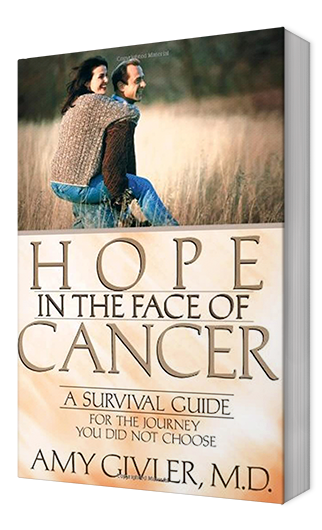
Amy Givler is a family physician practicing in various settings in northeastern Louisiana. She and her husband have three nearly-grown children. Her book, Hope in the Face of Cancer: A Survival Guide for the Journey You Did Not Choose, was written to help people navigate the confusing early months of a cancer diagnosis.